
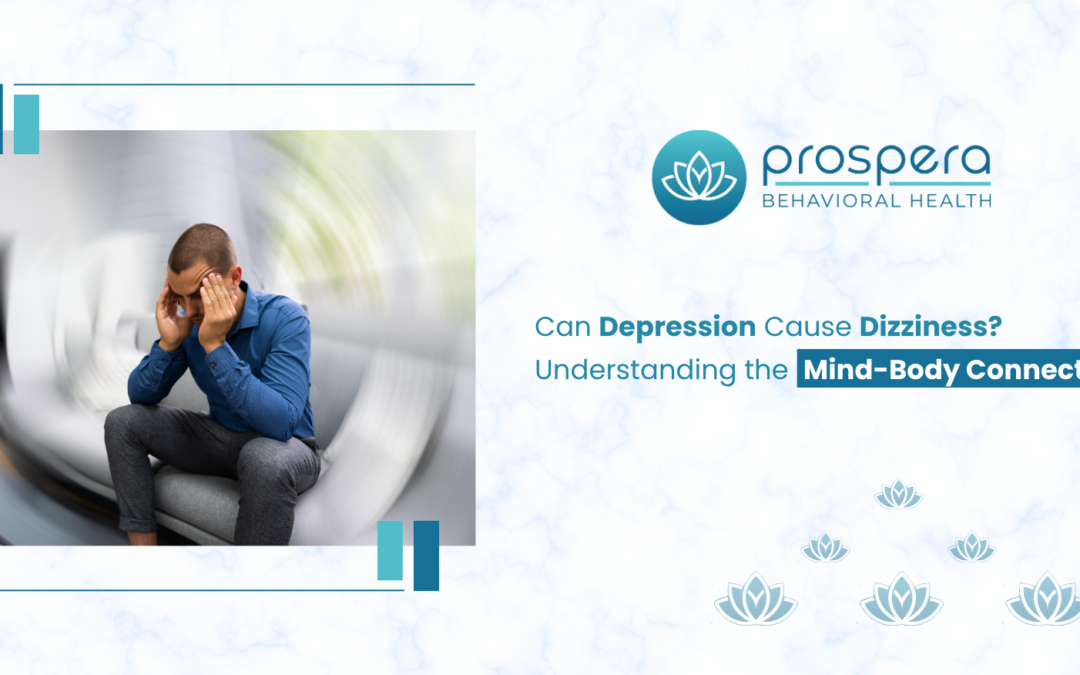
You had all the tests done. Could be blood work, it could be your blood pressure, or even an ENT. Everything came back fine. But the confusion just will not go away, and none of them has even given you a proper answer.
The most popular but least acknowledged fact is that depression and anxiety are among the highest missed diagnoses for chronic dizziness.
The dizziness is real. The standard physical workup does not touch this; somewhere, the mechanism just sits and hides.
So, Can Depression Cause Dizziness?
Yes, depression can absolutely cause dizziness.
The region of your brain that controls parts of the autonomic nervous system (the part that regulates the heart and blood pressure, even your sense of space) is also the same area that regulates emotion. Those areas are under stress when depression is active. They send disrupted signals to the rest of the body.
Vestibular processing is one of the things that gets disrupted. Despite the vestibular system being located in the inner ear, it is actually a report to the brain, and then what you do with that information remains to be seen.
The brain interprets those signals differently in a depressed state or when it is experiencing anxiety. Small movements get exaggerated. The ground you stand on and its sense of stable space becomes slippery. That is disorientation, and it is a top-down experience rather than bottom-up.
This is also why people ask: Can depression make you dizzy? The answer, neurologically, is yes.
And this also involves serotonin. So while you might know it as a chemical related to mood (which is true), it’s actually instrumental in the functioning of the vestibular system as well. Low serotonin is not just about how you feel emotionally. It impairs your brain’s ability to calibrate balance and spatial awareness. Also explains why some antidepressants have dizziness on their temporary side effect list for the first few weeks. The system is adjusting.
Then there is anxiety, which complicates things further
Depression and anxiety tend to travel together, and anxiety has its own direct line to dizziness. When you are anxious, your breathing pattern shifts, usually becoming shallower and faster without you noticing. That changes the carbon dioxide balance in your blood. What follows is lightheadedness, a sense of unreality, tingling, and dizziness that is physiologically identical to what an inner ear problem produces.
The harder part is what happens next. The dizziness creates more anxiety. The anxiety worsens the dizziness. You start anticipating it in certain situations, which makes those situations feel unsafe, which tightens the loop further. People start avoiding grocery stores, driving, crowded places. The world gets smaller. And the physical symptom that started all of it still has no official diagnosis attached to it.
Chasing dizziness symptom by symptom without looking at the mental health picture underneath it is one of the main reasons people spend years going from specialist to specialist without getting better.
Most people do not recognize the physical symptoms of depression
Depression is not just emotional. It is a whole-body condition, and for a lot of people the physical symptoms show up as loudly as the mood symptoms, sometimes louder. Dizziness is one of them. So are:
- Headaches that sit at the base of the skull or behind the eyes and come back most days
- A heaviness in the limbs that is not muscle fatigue, more like moving through something thick
- Digestive disruption, nausea, changes in appetite, or a gut that seems to track your emotional state
- Chest tightness or a vague pressure that comes and goes without a cardiac cause
- Fatigue that does not improve with sleep, waking up already depleted
- Sensitivity to noise or light that was not there before
When several of these are happening alongside low mood, persistent flatness, or loss of interest, they are not separate problems. They are the same problem showing up in different parts of the body.
How to tell if dizziness might be coming from depression or anxiety
A proper physical workup should always come first. There are real medical causes of dizziness that need to be ruled out, inner ear conditions, blood pressure issues, thyroid dysfunction, anemia, medication side effects. That process matters and should not be skipped. Understanding the stages to depression also helps here, because dizziness tends to appear once the condition has progressed past the early phase and the body has been under prolonged stress.
But once that is done and nothing is found, these patterns are worth paying attention to:
- The dizziness gets worse in emotionally charged situations, stressful environments, or around particular people
- It improves when you are absorbed in something and comes back when things quiet down
- It started around the same time as a significant life stressor, a loss, a transition, a period of prolonged pressure
- It is accompanied by other unexplained physical symptoms that also came back clear on testing
- Rest helps temporarily but the dizziness returns without any clear physical trigger
Cortisol is doing more damage than people realize
With depression, cortisol is sustained for a long time. Cortisol is popularly known as the stress hormone; however, few people are aware of what sustained elevation actually does to the body over weeks and months.
It disrupts sleep architecture, so you may be sleeping eight hours but the quality is poor. Poor sleep alone causes dizziness. It causes tension across the entire body, which also impacts posture and blood flow to the brain.
The potential toxic load stresses the nervous system by keeping it in a persistent, low-grade state of alertness and irritates the vestibular system to become hyper-sensitive to otherwise normal inputs. Doing something completely normal, standing up too quickly from a couch, looking to one side or the other, walking through a crowded and noisy area, triggers an imminent attack response, and you find yourself dizzy.
A dramatic acute stress event is not at all required for any of this. Softly, gently, over the years with those who have been holding up the weight of the world way too long without proper support.
What actually helps
To address the dizziness is to treat what lies beneath it. That is what falls by the wayside when care attempts to address only the physical symptom.
Therapy truly is the most crucial component. CBT has the strongest evidence for depression and anxiety, as well as for the physical symptoms that often accompany both. One of the things it does is to eliminate the feedback loop that has anxiety about the dizziness driving the dizziness. When that loop weakens, the frequency of symptoms typically falls too.
Many people take medication as part of the picture. As SSRIs regulate serotonin, and as discussed earlier, serotonin is directly associated with the vestibular function. With mood stabilization and serotonin normalization, the dizziness also usually resolves with improvement in emotional symptoms.
At Prospera Behavioral Health, the approach is to look at the whole picture from the beginning. Not to separate what is happening emotionally from what is happening physically, because in most cases, they are the same story told in different ways.
If you have been passed around between specialists without answers
That experience is exhausting and it is also very common with this specific symptom pattern. Dizziness sends people to their primary care doctor, then to an ENT, then maybe a neurologist. Tests come back normal. You are told to manage stress. No one asks about your mood in any serious way.
At some point the more useful question is not what is wrong with your ear or your blood pressure. It is what has been going on in your life, and how long you have been carrying it, and whether the way your body feels right now might be connected to that.
- You have had dizziness for weeks or months with no physical explanation after a full workup
- Mood changes, flatness, or persistent worry have been part of your life around the same time
- The dizziness tracks your stress levels more closely than it tracks anything physical
- You are tired of being told everything looks fine when clearly something is not
The physical and the emotional are the same conversation.
Prospera Behavioral Health works with adults, teens, and children in Houston and across Texas. If you have unexplained physical symptoms alongside mood changes and want care that actually looks at both, we are here.
Free consultation available.
Book a Free Consultation prospera-bh.com/contact
For informational purposes only. Not a substitute for professional medical advice. Rule out physical causes of dizziness with a qualified medical provider before attributing symptoms to mental health. In a mental health emergency, call 988 or go to your nearest emergency room.