
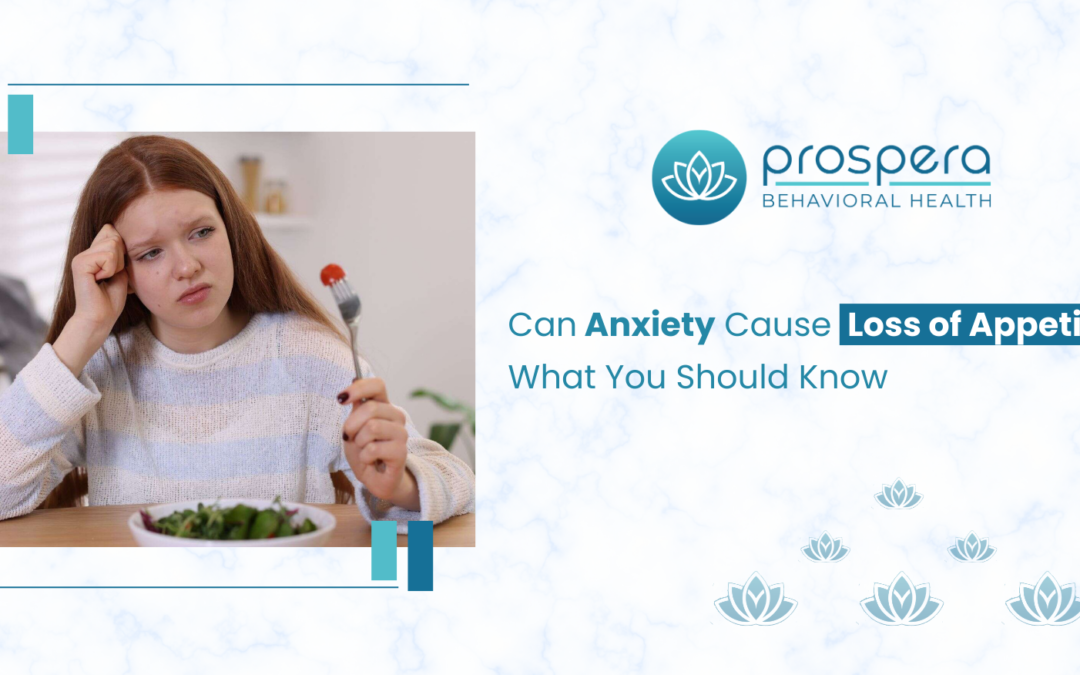
You have been so stressed and overwhelmed recently.
And somewhere along the way, food stopped appealing to you. You are about to eat, and don’t feel like it.
If you’ve been asking yourself, “Can anxiety cause loss of appetite?“ – then the answer is yes. You’re far from alone in experiencing it.
Anxiety causing loss of appetite is one of those symptoms that doesn’t get talked about enough. People expect panic attacks or insomnia.
What they don’t really expect is to look at a meal they normally enjoy and feel nothing.
Here’s what’s actually going on.
What Anxiety Does
Anxiety does not just occur in your head.
The instant your brain thinks that you are threatened, whether literally or not, it will start a response that spans your entire body.
Adrenaline pours in. Cortisol is increased. The blood circulation leaves your digestive system and goes to your muscles.
And your body is preparing to live, not to eat dinner.
This is quite reasonable during real danger.
The issue is that anxiety makes such a response stay active even in situations when the only danger is a working week, a difficult relationship, or a spiral of worry at 2 a.m.
The longer it runs, the more your hunger gets pushed aside.
Your Gut Gets Dragged In Too
The gut and the brain are in constant communication with each other. This is known as the gut-brain axis. With high anxiety, your brain gives distress signals to your digestive system.
The outcome is nausea, cramping and tightness of the stomach.
Pain that renders eating really unpleasant.
When meals start to feel like discomfort rather than relief, your body learns to avoid them. The pattern builds quietly from there.
Does Anxiety Make You Not Hungry? Here’s Why It Does
People often wonder, “Does anxiety make you not hungry?” or whether it’s just them being “in their head.” It’s neither – it’s biology.
Under chronic nervousness, a couple of things occur which directly obstruct the appetite:
- Cortisol suppresses ghrelin. Ghrelin is the hormone that causes hunger. As cortisol remains high, ghrelin is suppressed. It is possible to go the whole of the day without eating and hardly notice it until you become weak or tired.
- Food is not appealing because of physical symptoms, which include nausea, dry mouth, stomach tightness, and acid reflux, leaving little room to think of eating.
- Anxiety engulfs you – hunger is a silent, unobtrusive alarm. Anxiety is high-pitched. Having your mind on a loop means no bandwidth to realize you did not eat since morning.
This is the reason lost appetite anxiety can hardly be viewed as an intentional decision. That call is being made to you, albeit quietly, by your nervous system.
Does Stress Make You Lose Your Appetite Too?
Yes – and the mechanism is nearly identical. Does stress make you lose your appetite?
It does, as stress and anxiety are triggered by hormones in the same way. High levels of cortisol, disturbed digestion, and physical stress, it will all result in the same thing.
Can anxiety cause decreased appetite even when life isn’t in crisis? Absolutely.
Constant low-grade worry is just as damaging as acute worry, only at a slower pace and less noticeable.
It is only when the weight loss is visible that many people can connect the dots.
Signs That Loss of Appetite Is Affecting You
Loss of appetite does not always present itself vividly. It has a way of creeping in and being rationalized. Watch for these patterns:
- You often miss meals and can only notice it when you feel lightheaded or exhausted.
- The mornings are the worst – breakfast seems impossible, before the anxiety of the day begins to work.
- Food that you were once looking forward to now seems like a burden.
- You eat very little of anything because anything beyond that would be excessive.
- On calm days, you do feel your appetite improving quite significantly and at times when you are stressed, it vanishes.
When you are likely to notice that your eating patterns correspond to your anxiety, then it is not a coincidence.
When It Becomes a Real Problem
It is natural and temporary to experience a momentary loss of appetite prior to some stressful event.
The response happens and the stressor is gone, and you get hungry again. That’s healthy.
When it ceases to bounce back is the question. Anxiety, which has a chronic loss of appetite, may result in:
- Nutrition deficiencies that aggravate your mood, concentration, and energy.
- Sudden, unwanted loss of weight.
- Mood swings that later develop into depression.
That cycle is not likely to work itself out. It most often requires to be proactively resolved.
What Actually Helps
In the Short Term
- On bad days, eat soft foods – oatmeal, eggs, bananas, soups made of broth.
- Count on timers to eat.
- Slow, steady breathing a minute before meals will help relax your body as it gets out of fight-or-flight mode.
- Limit caffeine – it increases nausea, restlessness, and all physical symptoms already caused by anxiety.
For Lasting Improvement
The short-term strategies above help keep you nourished.
But if you’re dealing with anxiety causing loss of appetite on an ongoing basis then the most effective path is treating the anxiety at its root.
Evidence-based approaches like these help:
- CBT
- ACT
- Mindfulness-based therapy
They work on the underlying patterns.
Once the anxiety has subsided, the appetite usually comes.
When to Reach Out
Speak with a mental health professional if:
- It has been ongoing for more than two weeks
- You’ve lost noticeable weight without intending to
- Anxiety feels constant rather than tied to specific moments
- It’s quietly affecting your sleep, work, or relationships
Get Support
At Prospera Behavioral Health, we help people in Houston work through anxiety and the physical toll it takes – including its effect on eating, sleep, energy, and daily life.
Our licensed therapists offer:
- Individual therapy
- Group sessions
- Telehealth across Texas
Book a free consultation at prospera-bh.com or call (713) 804-9120.