
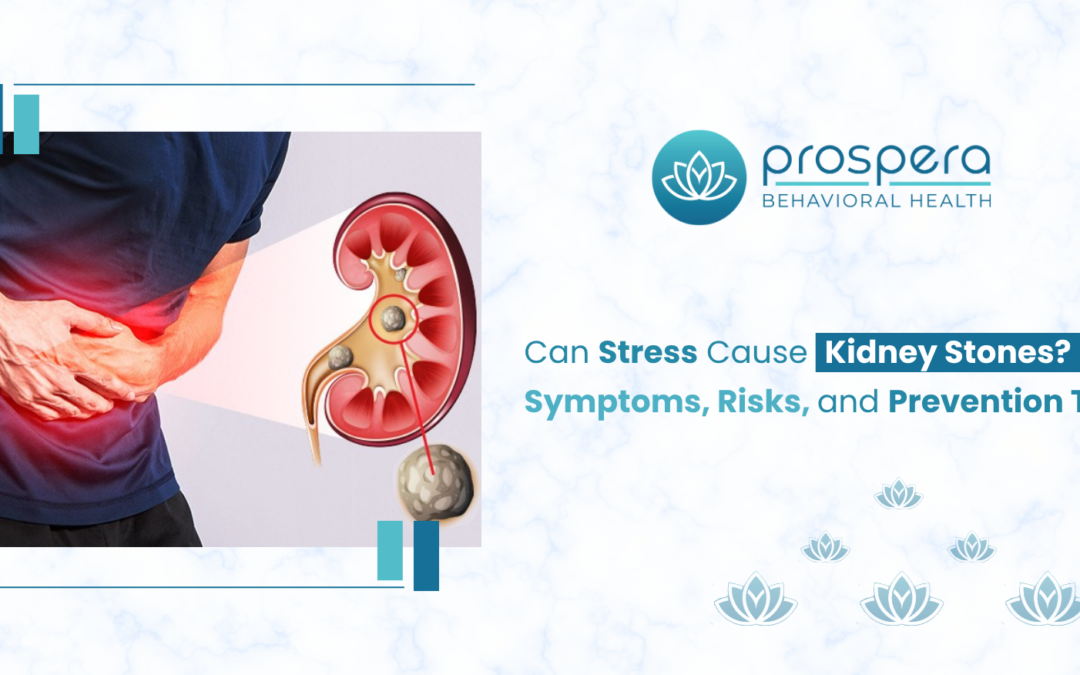
Here is something most people never connect: that time of grueling deadlines at the workplace, the divorce, the months of insomnia and living on coffee, and then, suddenly, a kidney stone.
It is like ill fortune. But it is most likely not.
The connection between stress and kidney stones is not discussed much, yet it may exist.
Not the generalized way of saying that stress is bad for you. In a particular, biological, here-is-what-is-really-happening manner.
To start with, does stress really lead to kidney stones?
Not on its own, no. Stress is not going to conjure a stone out of thin air.
The way chronic stress works, however, is to silently change things in your body – your hormones, your habits, your sleep, your diet – in a way that makes stones a lot more likely to form.
The majority believe that kidney stones are all about hydration or calcium. And such things count.
However, the image is greater than that, and stress is in the center of the picture.
What stress is actually doing to your body.
In case you are stressed during a long period of time, your body continues to release cortisol. That is your primary stress hormone, and in brief bursts, it is good.
But when it remains high for weeks or months, things begin to go off track.
It increases the amount of calcium that is pushed into your urine.
Having high cortisol will make your kidneys release more calcium. The most common kind of kidney stone is calcium oxalate.
The combination of the already-concentrated urine with more calcium is not so great.
You cease to take care of yourself.
Last time you had sufficient water on a stressful day? Most people forget. They take coffee rather, perhaps alcohol at night,
what is quick and easy to eat, and sleep badly. All those things squeeze your urine and increase your risk of stones. It adds up.
Your diet is wrong.
Stress eating is inclined to salty, heavy foods. Huge sodium levels cause your kidneys to excrete even more calcium. Protein rich in animals increases uric acid. The combination or either of those things eases the formation of stones.
Bad sleep makes it worse.
Stress destroys sleep and disrupts the body’s mineral regulation by the kidneys during sleep. Research has attributed reduced sleep to increased risk of kidney stones. The stress-no-sleep cycle is thus causing more harm than most are aware.
What does a kidney stone actually feel like?
Small ones often pass without you ever knowing. Bigger ones are a completely different story. People describe the pain as one of the worst they have ever felt, which sounds dramatic until you have been through it.
Things to watch for:
- Sharp and cramping pain in your side or back that hits in waves
- Pain that moves toward your lower abdomen
- Pain that moves to your groin
- Burning when you urinate
- Urine that looks pink, red or cloudy
- Feeling like you need to go urgently but barely going when you do
- Nausea, sometimes vomiting
- Fever or chills, which usually means there is an infection involves
Who tends to get them?
Some people are just more prone to kidney stones than others. Stress raises the risk, but it usually works alongside other factors:
- You or a family member has had kidney stones before
- You are chronically dehydrated or just never drink much water
- Your diet leans heavily on salt, red meat, or foods like spinach, chocolate, and nuts
- You are carrying extra weight, which is linked to higher uric acid levels
- You have a condition like hyperparathyroidism or inflammatory bowel disease
- You mostly sit for work and exercise infrequently
- You have been under sustained stress for a long time with no real outlet
How to lower your risk.
The good news is that what helps prevent kidney stones and what helps manage stress overlap more than you would think. You are not dealing with two separate problems.
Drink more water – seriously
It sounds boring but it is genuinely the most effective thing you can do. Pale, diluted urine means your kidneys are not working against a concentration problem. If you are busy and keep forgetting, keep a bottle on your desk. Set an alarm if you have to.
Pull back on salt
- Processed food, takeout, and canned goods are where most of it hides
- Cooking at home more often gives you real control over how much goes in
- Under 2,300 mg a day is a reasonable target for most people
Ease up on animal protein
- You do not need to cut it out. Just not in huge amounts at every meal
- Mixing in plant-based protein a few times a week genuinely helps your urine chemistry
Actually deal with the stress
This is the one people skip. Not because they do not care, but because it feels softer or less urgent than the physical stuff.
But un managed stress is doing real, measurable damage to your body, and patching the symptoms without touching the source only goes so far.
- Moving your body regularly, even walking, brings cortisol down noticeably
- Protecting your sleep schedule matters more than most people give it credit for
- Cutting back on caffeine and alcohol helps more than it seems like it should
- Talking to a therapist is not just about feeling better emotionally. It changes how your body carries stress over time
The bigger thing worth saying here.
Kidney stones are just one way chronic stress makes itself physical. It also shows up as high blood pressure, gut problems, a weakened immune system, and hormonal shifts. None of it is a coincidence.
Your body and mind are not separate departments. They are the same system. And when you are carrying a heavy emotional load for a long time, your body is carrying it too.
That is just how it works.
It is only when something breaks that most people become serious about it. A health wake-up, a burnout, a health scare.
But you need not wait for that. It is always better to catch it at the beginning.
When to get help.
See a doctor when you have sudden, severe back or side pain, blood in your urine, fever and urinary symptoms, and when you have nausea with pain in your flanks that does not go away
Do not sit on it.
Seek mental health assistance when the stress has been in charge of your life long enough, when your physical well-being continues to sink during moments of stress, when your subsequent coping strategies are no longer effective in helping you heal anyway.
That is an actual indicator that one should take note of.
Stress is worth addressing before it makes you.
At Prospera Behavioral Health in Houston, we help adults, teens, and professionals work through real-life stress, anxiety, and burnout. No waiting for a crisis.
Just honest, practical support that fits your life. If things have felt heavy for a while, reach out.
We are easy to talk to.
Book a Free Consultation