
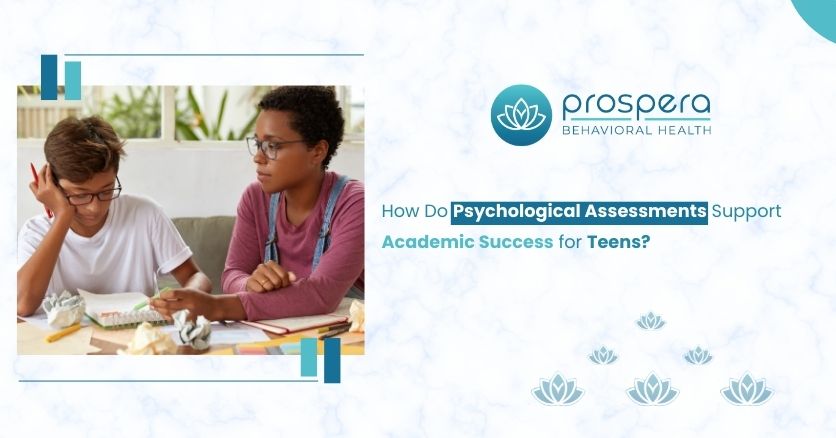
School can be hard for teens. There are many subjects to learn, tests to take and homework to finish. Some teens find school easy, while others struggle. This isn’t always because they are lazy. Sometimes, it is due to how their brains work or feelings of worry or sadness.
Psychological assessments can assist the teens, parents, and teachers in understanding these difficulties. A psychological assessment is an evaluation done by a trained professional. It examines the behaviors of a teenager in thinking, learning and feeling.
At Prospera Behavioral Health, we provide psychological assessments that are careful, thoughtful, and easy to understand.
Understanding a Teen’s Learning Needs
Every teen learns differently. Some can focus effortlessly in the classroom, and others get sidetracked or uneasy. Psychological assessments help identify such differences. For example:
- A teen may have ADHD, making it hard to pay attention or organize schoolwork.
- Another teen might struggle with mood problems, like sadness or anxiety, affecting motivation and concentration.
Assessments help professionals see a teen’s strengths and areas for help, which aren’t always clear from grades. Some teens may be bright but still struggle due to attention or emotional challenges.
Psychological testing gives clear insight. This aids in the collaboration of the teens, families and teachers to succeed.
How Do Psychological Assessments Support Academic Success for Teens?
Personalized Guidance for School Success
One major benefit of psychological assessments is personalized guidance. After the evaluation is conducted, a detailed report in which the strengths, challenges, and learning styles of the teen are explained is given. In this report, there are practical school and home suggestions, including:
- Breaking assignments into smaller steps
- Using a planner
- Taking short breaks while studying
If a teen feels anxious about tests, the report may suggest coping skills. These can include deep breathing or talking to a counselor before exams. These recommendations match the teens’ needs. They support the teen in using their strengths to face challenges.
Supporting Emotional and Behavioral Growth
Academic success is not just about learning facts or getting good grades. Motions affect how teens perform in school. Teens who feel anxious or sad may struggle with homework or speaking up in class. Assessments consider these emotional factors.
At Prospera Behavioral Health, we provide evaluations for:
- Mood disorders
- Emotional concerns
- Behavioral challenges
This helps identify issues affecting school performance. When a teen realizes it, they can find support. This might be therapy, coping skills, or family counseling. Teens succeed in school when they feel good and behave well.
Clarifying Academic Challenges
Sometimes, it is unclear why a teen struggles in school. They may have trouble reading, writing, or solving problems, but the reasons may not be obvious. Psychological assessments can clarify these challenges. They are used to determine whether the challenges are associated with:
- Learning differences
- Attention issues
- Other underlying factors
Having this clarity reduces frustration for both the teen and their family. Instead of guessing, the family receives a clear support plan. The information can help teachers adjust their classrooms. They might give students extra time on tests or let them finish tasks in other ways.
Encouraging Confidence and Growth
A psychological assessment can boost a teen’s confidence. When they understand their strengths and learn strategies to handle challenges, they feel more capable. Teens often struggle not because they cannot learn, but because they do not know the best way to learn for themselves.
For example, a teen with ADHD might think they are “not smart” because they get distracted easily.
After an assessment, they may discover their brain works differently and learn techniques to stay organized and focused. This understanding can reduce stress and encourage a positive attitude toward learning.
Family Support and Collaboration
Psychological assessments also support families. Caregivers and parents often feel troubled or hesitant about how to assist a struggling young adult. The evaluation provides clear information and guidance for families, including strategies for:
- Home routines
- Emotional support
- Communication
Prospera Behavioral Health provides family psychoeducation. This helps parents understand results and use recommendations at home. Families can support their teens’ learning and growth by working together with them and professionals.
Flexible Support Options
Every family has different needs and schedules. Prospera Behavioral Health provides flexible services. This includes telehealth sessions, so teens and families can easily access care. Psychological evaluations can be found for different issues, such as:
- ADHD
- Mood disorders
- Emotional and behavioral challenges
- Academic struggles
Each evaluation includes a detailed report with personalized recommendations to guide next steps.
Moving Forward with Clarity
Psychological assessments provide clarity to the teenager, families and teachers. In case your teenager has some difficulties at school, a psychological test is possible.
It gives a clear picture of their learning and feelings, along with a plan that fits the teen’s needs. It helps parents and teachers work together.
Prospera Behavioral Health can conduct the testing and help create the plan. Our team provides simple, helpful reports and steps to follow. We want teens to feel better and do well in school.
Get your free consult today. We will listen and help you take the next kind step.
FAQs
How long does an assessment take?
The process usually takes a few sessions, including testing, interviews, and report preparation.
Can schools use the assessment results?
Yes. Reports often include recommendations that schools can use for learning accommodations and support.