
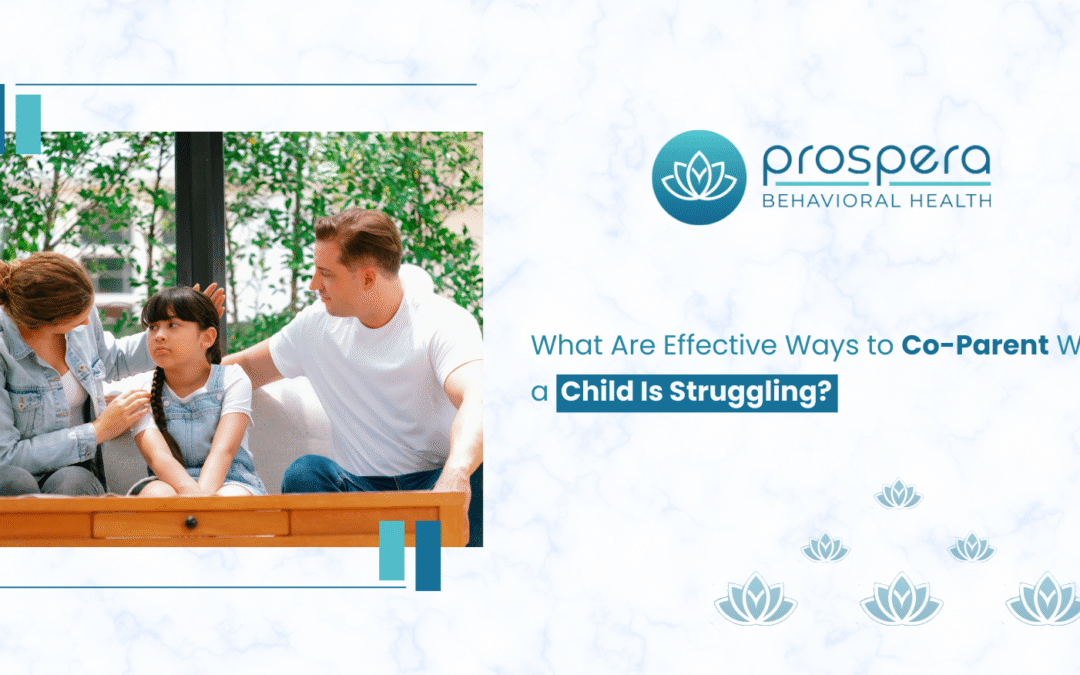
When your child is struggling, navigating co-parenting can feel overwhelming. At Prospera Behavioral Health, we understand those fears. Our goal is to support you in creating a safe, calm environment for your child. Here are some gentle, effective steps to help you lead with compassion.
Put the Child First
Say the child’s feelings matter. Use short phrases like, “I hear you” or “You are safe.” Let the child talk. Let them draw, play, or sit quietly. When adults focus on the child, the child feels less alone.
Keep a Simple Routine
Kids do better with routine. Make a small plan for school, meals, and bedtime. Share the plan with the other parent. A shared plan helps the child feel steady. If the child knows what comes next, they feel safer.
Talk About Rules Together
Pick a few rules that both parents agree on. Keep the rules short. For example:
- Bedtime at the same time.
- Homework before screen time.
- One calm timeout when feelings are big.
When rules match at both homes, the child learns the same message everywhere.
Use Calm, Short Messages
When you talk to the other parent, keep it calm. Use short messages. Say what the child needs, not what the other parent did wrong. Here are examples:
- “Sam slept poorly last night. He needs a quiet morning.”
- “Can we agree on a homework time tonight?”
This keeps the talk about the child, not the fight.
Share Important Information
Write down notes about the child’s mood, sleep, or any big change. Share these notes with the other parent. This helps both parents know what is working and what is not. If the child is in therapy, share the therapist’s tips that both parents can use.
Use Family Support and Parenting Coaching
Getting help is brave. At Prospera Behavioral Health, we offer Family Support & Parenting Coaching. A coach can teach simple ways to help the child. Coaches help parents speak the same way. They help parents make a plan that works at both homes.
Try Telehealth If You Need It
If one parent lives far or has a busy job, telehealth can help. We provide Telehealth Therapy in Texas. Parents can join calls from home. This makes it easier to get help fast. It also lets both parents meet with the same therapist when needed.
Be Open to Therapy for the Child
Individual Therapy can help a child learn to name feelings. A therapist uses play, stories, and simple tools. The child can learn to calm down and to talk about worries. When both parents support therapy, the child feels stronger.
Consider a Psychological Evaluation
If the child struggles a lot at school or at home, a Psychological Evaluation can help. This check tells what the child finds hard. It helps parents and teachers plan the right help. Prospera Behavioral Health is available to offer this service when required.
Use Group Therapy and Parent Groups
Sometimes it helps to meet other parents. Group Therapy and parent groups let you hear others’ ideas. You learn simple tips and feel less alone. Groups also give parents a calm space to share and learn.
Plan How You Will Handle Big Emotions
Make a shared plan for big outbursts. Keep the plan short and kind. Example steps:
- Move to a quiet place.
- Use a breathing game for three breaths.
- Offer a favorite toy or a drink of water.
- Check in after calm returns.
Practice the plan together. The child will learn the plan faster if both parents use it.
Keep Respect in Front of the Child
Avoid discussing disagreements with the other parent in the child’s presence. If a fight happens, wait until both parents are calm to talk. Then use short words and focus on the child’s needs. Showing respect helps the child trust both parents.
Teach the Child How to Ask for Help
Teach simple words the child can use: “I need help,” “I am scared,” or “Can I have a hug?” Support the child by recognizing their call for help. This builds trust and safety.
Take Care of Yourself
Parents need rest and help too. When you are calm, you can help your child better. If you need a short talk, reach out to a coach or a therapist. Prospera offers support for parents and young professionals who need help with stress.
Keep Notes of Success
Write down small wins. Maybe the child slept better for one night. Maybe homework went well once. Share these wins with the other parent. Celebrating small wins helps everyone keep trying.
When to Ask for More Help
If the child seems more worried, sad, or angry for many weeks, ask for help. If your child’s grades slip or they self-harm, get professional help right away. We’ll guide you to the next steps.
We Are Here with You
At Prospera Behavioral Health, we provide care for families in Houston and through Telehealth in Texas. We offer:
- Family Support & Parenting Coaching
- Individual Therapy for children
- Group Therapy for parents and families
- Psychological Evaluations
- Help for young professionals and busy parents
You do not have to do this alone. We can help you make a plan that fits your family. Talk to us with kindness. We will listen and work with you to help your child feel better.
FAQs
Q. When should we ask for extra help?
If hard feelings last many weeks, school gets worse, or the child hurts themself, ask a professional.
Q. What is parenting coaching?
A coach teaches simple ways to handle big feelings and helps both parents use the same plan.