
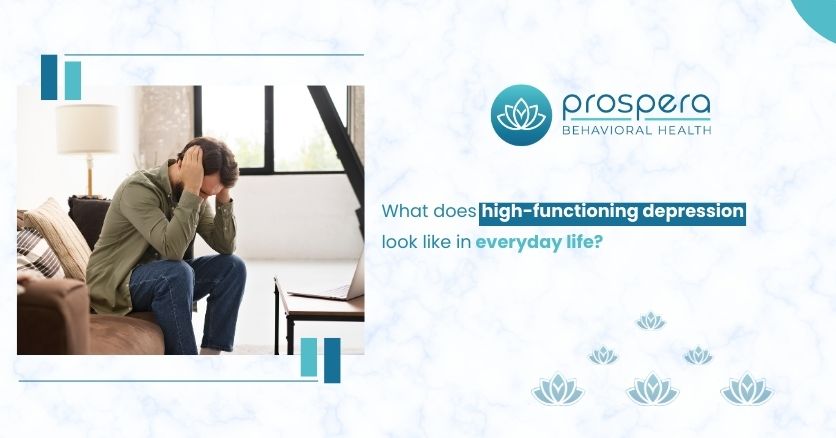
High-functioning depression can be quiet. Individuals who have it can continue to work, attend school, or live with their families. They can appear to be okay. They might feel exhausted, depressed, or void most days on the inside. In this case, we will help you understand how it can manifest in real life.
Common Signs You Might See
You can notice small changes that add up:
- They keep going to work or school but do less than before.
- They smile and talk, but feel empty inside.
- They sleep too much or too little most days.
- They say things like “I am fine” even when they are not.
- They stop doing hobbies they once liked.
- They feel tired even after rest.
- They have low hope for the future.
How It Feels Day to Day
Every morning can feel heavy. Tasks that used to be simple feel big and slow. You might try hard and still feel not good enough. This can make you work longer hours to hide the struggle. You may worry you will lose your job or let your family down. That fear can keep you from telling anyone.
At Work or School
People with high-functioning depression often keep up with tasks. They meet deadlines. They show up on time. But they may:
- Need more effort to start tasks.
- Make small mistakes that they did not make before.
- Avoid new projects or chances to grow.
- Feel drained by social parts of the job.
They may look successful but feel worn out inside.
In Relationships
You can be close to people and still feel far away. You may:
- Say yes to plans but don’t enjoy them.
- Pull back from deep talks.
- Feel guilty for being distant.
- Argue more or stop sharing feelings.
Partners and friends may not know what to do. They may think you are fine because you are still working and caring for others.
How High-Functioning Depression Affects Family Life
At home, daily chores may pile up. You may care for kids, but have less patience. You may forget small things or feel numb. Parents may feel guilt. Teens may hide feelings behind humor or anger. Kids might think the parent is busy, not sad.
Ways You Can Help Yourself
Small steps matter. Try one thing at a time.
- Keep a short routine. Maintain the same bedtime and wake time each day.
- Break big tasks into tiny steps. Celebrate one step done.
- Move your body. Short walks help mood.
- Try to sleep the same hours each night.
- Talk to one trusted person about how you feel.
- Write one thought in a short journal each day. Even one line helps.
These steps do not replace therapy, but they can help you feel a little lighter.
How Family and Friends Can Help
If someone you love has high-functioning depression:
- Offer to listen without judging.
- Ask small, kind questions like “How are you today?” not “Are you really okay?”
- Help with one task, like cooking or child care.
- Encourage small steps. Praise effort, not just results.
- Remind them that getting help is normal and ok.
People do better with steady, calm support.
When to Seek Professional Help
You should seek help if you:
- Have felt sad most days for weeks or months.
- Find it hard to do daily tasks.
- Think about hurting yourself. If this happens, get help right away.
- Feel stuck even after trying small changes.
A therapist or psychologist can help you find tools that fit your life.
How Prospera Behavioral Health Can Support You
If you are in Texas, Prospera Behavioral Health helps children, teens and adults. We offer care that fits your life, not only your symptoms. Services we provide include:
- Individual Therapy to talk one-on-one with a therapist.
- Psychological Evaluations to better understand your needs.
- Group Therapy, where you meet others with similar struggles.
- Family Support and Parenting Coaching to help the whole family cope.
- Young Professionals and Executive Support for work-life balance and stress.
- Telehealth Therapy in Texas, so you can get care from home.
We focus on clear tools and steady support. We aim to help you move forward in daily life.
Final Words
High-functioning depression can be hard to spot. People keep doing many things while they suffer inside. If you or someone you know seems tired, distant, or numb for a long time, it is okay to ask for help. Small steps matter. You do not have to do it alone. We are here to help you find a path that fits your life.
FAQs
Q. How is it different from other depression?
You may still work and smile, but inside you feel low for a long time.
Q. Can someone with this keep working or going to school?
Yes. They often keep doing tasks, but it may take more effort.